Tuesday, August 30, 2016

11 Important Questions You Should Ask The Doctor About A Knee Replacement Operation


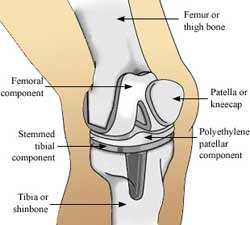
Right from a heavy fall in the playgrounds, to an on-road collision – there can be a variety of causes that can result in your knee joint getting severely damaged. There is no particular reason to despair on this count though, since complete or partial knee joint replacements (as the consultant doctor deems necessary) are performed regularly in India. The onus, however, is on you to clarify all doubts about the surgical process and the post-operative care regimen. Here are the eleven most important questions that you should ask your orthopaedic specialist:
1)      Can chronic blood clotting problems stand in the way of getting healed quickly? – If your blood does not tend to clot easily, inform the orthopaedic doctor about the same before the operation. In case you have a history of blood infections – make sure that the surgeon is aware of that as well.
2)      What is the quality of the prosthetic(s) to be used? – Request the doctor to use imported, top-quality artificial joints for knee replacements. Prosthetics of local make generally bear slightly lower price tags, but their efficacy and reliability over time remains suspect. You should not have to get the prosthetic replaced before 12-15 years (at the earliest).
3)      How long would the knee be in a protective cast? – For a few days after a complete knee joint replacement surgery, the limb would be encased in a cast. For partial replacements too, such casts would be used – albeit for a lesser number of days. Find out for how long the cast has to be retained, and make sure that the joint is not exposed to sudden, strong jerks in the interim.
4)      Would you need a blood thinning agent? – In order to prevent infections, orthopaedic specialists usually recommend using a blood thinner, right after an artificial knee joint has been inserted. Inquire in detail about the type of blood thinner you would require (if at all). You should also be aware of the duration for which the thinner has to be used.
5)      Can lung problems be an issue? – Yes they can – and that’s exactly why you should mention such problems (if present) to the orthopaedic surgeon. If you have lung clots and/or chronic asthma, acute respiratory problems can be experienced after the application of anesthesia. Even if it is a relatively minor custom fit knee surgery you are going for, lung problems should never be ignored.
6)      Would walking aids be required? – As you resume movements after a knee replacement surgery, you would probably be advised to use crutches, canes or knee braces for the first 2-3 weeks. Make sure that you follow the advice, to minimize chances of falls (which can cause further damages to the tender joint). In certain cases, special medical stockings might also have to be worn, to keep the knee joint properly compressed.
7)      What can be the probable after-effects of a knee surgery? – Most knee surgeons have the expertise and knowhow to complete joint replacement operations in the best possible manner – but the risks of problematic after-effects cannot be ruled out altogether. Find out about the inflammations, enhanced bone tenderness, and/or acute pains that might be experienced after the surgery. Make sure that you can get in touch with the doctor, in case of any such emergency.
8)      What would be the medications you need to have while recuperating? – Post-operative medications after knee replacements are not only about painkillers. You will, in all likelihood, have to take vitamin pills, anti-inflammatory pills, and other supplementary medicines. Get a thorough idea of the courses of these medicines, so that confusions do not arise later.
9)      Which knee rehabilitation exercises would be ideal for you? – To get back the lost mobility in your knee joint, you will gradually have to start following a regular exercise schedule. Application of heat and ice is necessary for the first 6-7 days after a knee joint replacement surgery. If there are no complications, you can proceed to light joint stretching exercises (as advised by the orthopaedic doctor).
10)   Will arthroscopic techniques be used for the surgery? – Advanced knee replacement surgeries are generally carried out with arthroscopic aids. This involves the insertion of a small camera-piece inside the joint – to provide a real-time feed about whether the joint is being inserted and set in the correct manner. In case your knee surgeon is in favor of using this technique, find out whether it would add to the overall expenses (and by how much).
11)   How long do you need to wait, before resuming your professional life? – If you are professionally employed, you need to know the duration for which you should stay on medical leave. Depending on whether you have undergone a partial or complete knee replacement, and whether yours is a desk job or not – a resting period of one to two months is recommended. Trying to rejoin work too soon might land you back at a hospital!
Inquire about how much the total bill for the knee joint replacement surgery is likely to be. While desperately trying to save money on a major orthopaedic procedure makes no sense at all, such information would help you arrange for the requisite funds from beforehand. Knee replacements are way less risky than what they used to be a couple of decades back – but that does not mean you can afford to be lax about it!

Wednesday, August 10, 2016

Top 8 Habits That Can Cause Serious Bone Damages


knee replacement surgery in kolkata
Orthopedic complications can jeopardize your ability to perform your daily tasks, and might adversely affect your movements too. Unfortunately, there are many common habits, which enhance the risks of potentially terminal fractures, and other bone damages. Say goodbye to the habits listed below, and lower your chances of requiring knee replacements and other such elaborate orthopedic procedures:
  • An overall reckless attitude – Irrespective of whether you are crossing a busy road, or are moving about in your house – doing everything with a modicum of care and patience is essential. Accidental falls can result in serious fractures, while on-road collisions can be potentially fatal. Be careful in whatever you are doing – and keep risks of bone breakages minimal.
  • Following an unhealthy diet – Having meals at irregular times, with lots of oil-rich items in them does not only increase your body weight – the habit makes your bones more prone to damages as well. Consult a professional dietician, about the necessary nutritional supplements (vitamins, minerals, omega acids, etc.) that should be present in your meals. Of course, if you have undergone a knee joint replacement surgery or any other such orthopedic operation recently, you need to follow special post-operative diets.
  • Heavy drinking and puffing habits – Regular smoking can leave you more prone to serious and long-standing bone damages. Frequent consumption of alcoholic liquors also has the same effect. Teenagers, in particular, need to stay away from such unhealthy habits – so that the development of their bone structure is not hampered in any way. 

pelvic fracture surgery kolkata
  • Staying at a single place for too long – Curling up on the sofa in front of the television is definitely an attractive idea – but don’t do this for hours on end every day. In general too, avoid maintaining the same body posture for too long. Obesity might be a direct result, which, in turn can lead to acute joint pains and aches. Often, such lazy habits can necessitate partial knee replacements and other such orthopedic treatments. Be a little more active – and stay healthier!
  • Taking too many painkillers – OTC painkillers offer only temporary pain relief, and hardly ever provides any lasting solution to orthopedic problems. If you are experiencing muscular and joint pains often, get in touch with a specialist as soon as possible. For example, if there are problems in your knee joint, you will probably require a custom fit knee surgery in India. Popping a few pills will only aggravate the problem.
  • Being too stressed out – While many don’t realize this, too much of stress has an unfavorable impact on the strength of your bone structure in particular, and your overall health, in general. Read books, listen to relaxation music, or perform any other task that helps you to get rid of daily stresses and mental strains. Your alertness levels will increase too!
  • Missing out on the symptoms of bone infections – Find out the common symptoms of the different bone infections, from the web. Tumors in and around the shoulder and knee area also need to be diagnosed at an early stage. If you are negligent on this count, you might end up with having no other option than going for a shoulder joint or partial knee replacement surgery.

custom fit knee surgery kolkata
  • Subjecting yourself to bone fatigue – Do not perform tasks that involve repetitive limb movements, for too long at a stretch. This is particularly important, if you are involved in any type of industrial activities. The resultant bone fatigue can leave you more vulnerable to fractures and other damages.
Get in touch with professional knee surgeons and other orthopedic experts, whenever you start feeling discomforts in the joints/bony areas of your body. Fractures caused by unforeseen accidents might be inevitable – but you can at least avoid the above-mentioned habits, and boost the general healthiness of your bones!

Friday, July 29, 2016

Risk and Complications You Must Be Aware of Hip Replacement Surgeries

acetabular fracture surgery kolkata
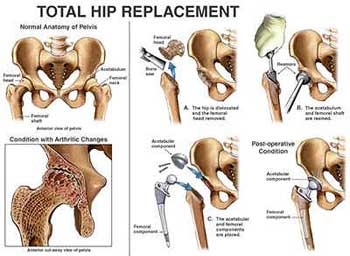
The number of replacement surgery in India has increased in the past few years. Due to the complication related to hip joints and knee joints patients are visiting doctors for the replacement surgeries. Hip joint replacement becomes important in case you suffer from arthritic hip or face an accident. In order get a long lasting relief from the arthritic pain, patients usually go for hip replacement surgeries. However, there is very little chance of error in this operation but still as like any major surgery it has also certain risks. In the post, I am going to discuss about the risks and the complications related to common hip replacement surgery in India that patients must be aware off. 
The complications can be divided into two different categories such as general complications and specific complications. The general complications are such as allergic to the given medication, loss of blood during transfusion, heart attack, organ failure or nerve blocking etc. These are very general complications, which are related with most of the major operations. However, there are certain specific complications are related with the hip replacement surgeries. These are discussed below.
Blood clots: During or later the surgery it has been seen that patient can come up with the complication of the blood clotting in deep veins of leg that resulting into pain or swelling. If the clot will not be cleared off, it can causes future complications also. In different ways, these complications can be handled. Doctors can give medications or in case of emergency can go for another operative process to get the clot out.
Pulmonary embolism: Sometimes it happens that the clots of blood passes through the veins and reach the lungs through the veins and can be stuck. In such cases, the patient can be detected with breathlessness, chest pain that may result into collapse. In order to get rid of these, doctors prescribe blood thinning medicines or oxygen therapy.
hip replacement surgery in kolkata
Infection: Infection can happen at any major operations. In order to avoid the infections operation theatres are especially equipped with systems that pump fresh air within it. The infection in case of hip replacements can be dealt with the medicines but the replaced joints have to be removed until that. After an interval of 6 to 12 weeks, new hip components are being planted again.
Dislocation: A study suggests that one in a 20 cases it has been found that the artificial joint may get dislocated. In such cases, the patient has to go through the operations again in order to put the joint back in the position. In case, it is occurring for more than once, the patient may have to gone through surgeries again or has to put and braces in order to stabilise the joints. Thus in order to stay protected it is necessary that the patient must not bend the joints more than 90 degree. It is also advised to them that not to cross the legs more than the midline of the body.
Wear: It has been seen that people operated and replaced with the plastic socket are facing the problem of inflammation and the worn plastic eat away hipbones. In order to get rid of the problem people are more often prone to the ceramic on ceramic or metal on metal joints. The reason is that these joints are wear less. However, it comes with the risk as metal on metal joints releases metal ions, which can have other adverse effects on the bones. Advanced hard wearing plastics are also developed and used in order avoid this risk.
Inequality in leg length: Due to the artificial replacement sometime, an inequality of leg length is recorded within the patients after operation. However, doctors take ample precautions in order to avoid the problem. Due to the muscle weakness it is also been found that the height of the leg gets unequal. However, in order to resolve the issue a shoe raise is necessary in the shorter part.
replacement surgery in kolkata
Loosen replacement: One of the common causes of the failure of hip replacement is found due to the loosen up of the artificial replacement. However, it can occur at any point of time but generally, it has been seen to occur after the 10 or 15 years of the operation. In case the bone got thinner, the artificial joint may get loosen. In these cases, the only option is to undergo the surgery again in order to fix the problem.
In order to conclude I can say that surgery at any age is not a pleasant experience for anybody. However, at some point of time we have to choose between living a normal life and life in a incapacitating conditions. Therefore, we have to choose the surgical process in order restore the normal functionalities our life.

Wednesday, July 27, 2016

Common Complication of a Knee Surgery


In a long medical career I have found that people faces a lot of trouble in the post surgery period. However, most of the knee replacement surgeries are recorded as successful one. There are only few cases where it has been found that there are some complications related with the knee replacement operations. Broadly, the complication can be classified into two different categories. These are short-term complication and long-term complications. We will discuss both the problems on by one.
Short terms problems are the problems, which are negligible one and are settled within a few weeks. Here are certain examples of the following:
Pain: Once the patient comes out of the anaesthesia, he or she may feel some amount of sore around the place of operational scar. In order to keep the pain in control doctors usually give pain relief medicines. It is always advisable to follow the medications that are prescribed by the doctors and not to manage anything except that.  In order to keep the pain in control the patients can do the lighter exercises also. However, within few week patients likely to feel better as they do not have to fight with arthritis anymore and can move the knees freely.
knee replacement surgery in kolkata
Numbness: Patients often feels numb around the scar. The reason is that due to operation few of the nerves that are related with feeling are being cut. It takes nearly a year or more to heal the nerves completely. Thus until it will be completely solved the patient may feel the numbness in that area.
Swelling: It is one of the very common problems faced by the patients. In the post operative period swelling around the knee is usually happens and to reduce it the bandages are tied around it. Once the operative bandages are removed, the patient can use the tubigrip compression bandages around the knee to support it. Keeping the leg elevated helps to drain the excess fluid from the knee and reduce the swelling. Applying the ice therapy can be another effective measure to get rid of the swelling. There are different types of ice therapy that can be used such as cryo cuffs generally used in hospitals.
In addition there are certain long-term complications are also there of knee replacement surgery. There are following:
Wearing the prosthetics can be one of the long-term problems that people usually faces. It has been seen that the knee replacement surgery last nearly 20 years from the operation. However, the timing may differ from patient to patient depending on the age and other specifications.
It has found that there are nearly 1.4% of the people have to do a total replacement which is known as revision knee replacement. Else, people can be relived through the partial knee replacement surgery also.
pelvic fracture surgery kolkata
Another long-term complication of knee replacements is any kind of infection at the knee joints. Fortunately, the chance of infection in case of the knee replacement is very rare. There are three different classification can be done of the knee infection based on the time from the surgical period. These are Early that occurs within a timeframe of three months from the operation, Delayed that occurs within three months to less than a year and Late, that are happened after a year from the surgery.
Early infection mostly occurs due to microorganisms that enter the body during operation. The common traits of the infection is swelling, fever effusion etc.
Delayed infections have the same symptoms as of the early infections. It is also caused of the microorganisms while doing the operation.
Late infections are mostly happens due to haematogenous situation means are infected from the other parts of the body. Ion this kind of infection the bacteria come from the other places such as dental area, pneumonia, urinary infections etc that travel through the blood. In order avoid such kind of infection doctors generally advice the patient to take antibiotics at the pre operative stage. However, doctors test the infected blood and culture that to heal the problem.
custom fit knee surgery kolkata
In addition to these complications, there can be other complications also such as forming clots of blood in the vain, damage of blood vessel or the nerves etc. Other common complications are congestive heart failure, hyperglycaemia, haemorrhage, Edema etc. Instability of ligaments, stiffness of joints, problems related to track the platella are some of the other complications that can rise at the post operation period. Therefore, it is advisable to the patients that if they found anything unnatural after the operative period they must visit their doctor without loosing any time further.